



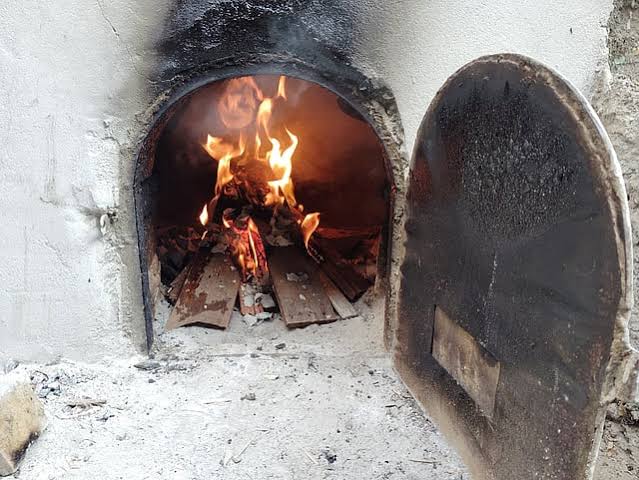
Kashmir: The traditional Kashmiri hamam is a dry, masterfully designed underfloor radiant heating system built directly into the foundations of a home or mosque to conquer brutal, sub-zero Himalayan winters. Centuries ago, long before the advent of modern HVAC(Heating, Ventilation and Air Conditioning) systems, local builders combined geology and physics to transform ordinary stone floors into highly efficient, long-lasting thermal batteries. Rather than relying on simple direct firewood heat that vanishes quickly, this indigenous architectural discovery allows an entire room to remain warm for up to an entire day using an incredibly minimal amount of fuel.
The structural design relies on a multi-layered sandwich of natural materials, each meticulously selected for its specific thermodynamic properties. The entire room rests on a hollow under-vault supported by hand-carved brick pillars, creating a precise network of air channels beneath the floor. Inside this lower cavity, masons spread a carefully calibrated layer of sand, small stones, and broken glass shards, all capped by massive, heavy slabs of devri (limestone) that form the visible floor. When firewood is lit in an outdoor hearth, the hot air and smoke are funneled cleanly through these underfloor channels to a chimney on the opposite side, heating the structural layers thoroughly without ever polluting the indoor living space.
The true scientific breakthrough made by these Kashmiri builders lies in their brilliant exploitation of thermal mass and latent heat retention. While standard open fires lose their warmth almost immediately after the flames die out, the hidden bed of stones, sand, and glass packed beneath the hamam floor acts as a giant energy storage unit. Glass and sand possess high heat capacity but low thermal conductivity, meaning they excel at trapping immense amounts of energy rather than letting it escape. The dense limestone slabs above slowly absorb this trapped heat and radiate a gentle, uniform warmth upward into the room for up to twenty-four hours after the fire has burnt out. Furthermore, because it warms from the ground up, this indigenous low-tech engineering creates natural convective air currents that heat the entire room evenly without drying out the ambient air.