



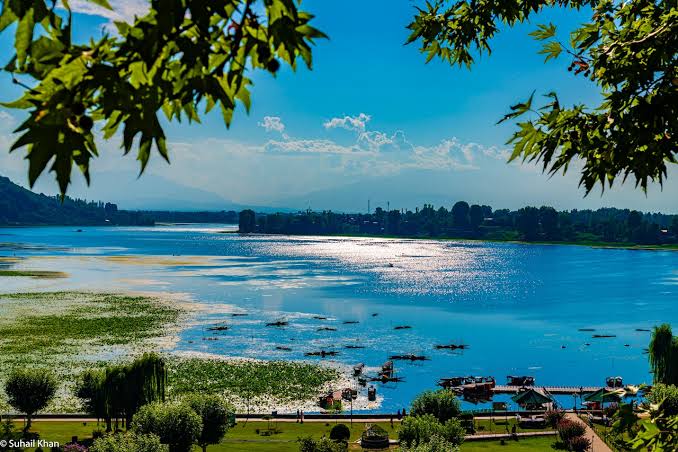
Kashmir: Nestled quietly in the Ganderbal district of Jammu and Kashmir, Manasbal Lake is a poetic paradise rightfully celebrated as the deepest freshwater lake in India. Spanning an impressive depth of nearly 13 meters, its crystal-clear waters are fed by pure natural springs and framed beautifully by the surrounding hills. The lake is universally famous for its extensive lotus gardens that bloom spectacularly during July and August. Visitors can take a peaceful shikara ride across the glassy surface, passing directly through these massive patches of pink and white blossoms. Beyond their natural beauty, these plants provide a major local livelihood through the harvesting of lotus stem (Nadru), a staple delicacy in Kashmiri cuisine, alongside the gathering of water chestnuts (Singarey) from the lake’s fertile floor.
Adding a unique structural layout to the area is the kondbal road, which directly bisects Manasbal Park into two distinct sections on the eastern bank. The upper and lower halves of the park offer beautifully manicured lawns and excellent vantage points to look across the quiet waters. On the northern shore lies Jharokha Bagh, a historic garden showcasing classic Mughal architecture built by Empress Nur Jahan in the early 17th century. Meaning “bay window,” the garden is designed in traditional, multi-level terraces that step down smoothly toward the water. While the palace ruins are ancient, massive historic Chinar trees still stand guard over the stone structures, giving modern travelers an authentic chance to stand where royalty once relaxed and looked out over India’s deepest lake.